First Nations Australians' Carer Resources



Nagel, T., Apuatimi, A., Fitz, J. (2007). Delirium. Darwin: Menzies School of Health Research https://www.menzies.edu.au/icms_docs/161599_Delirium.pdf
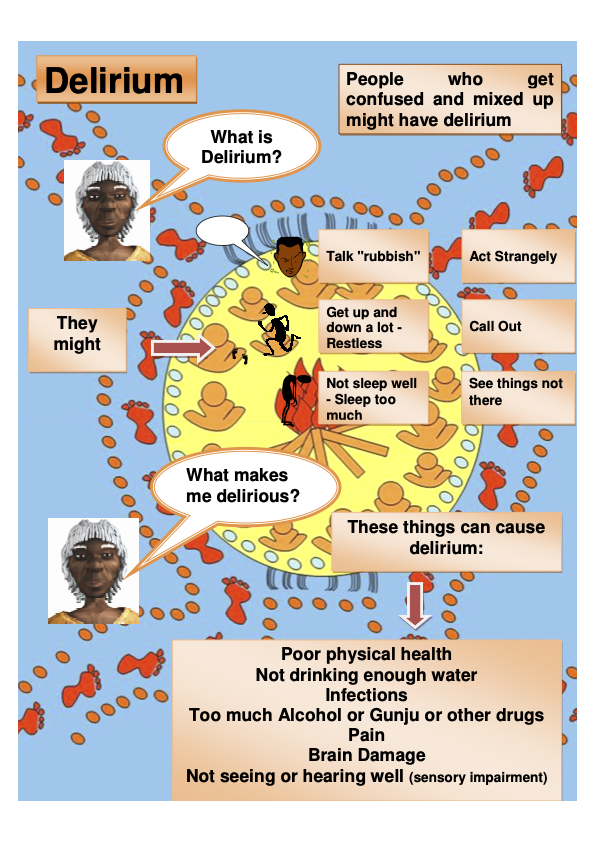
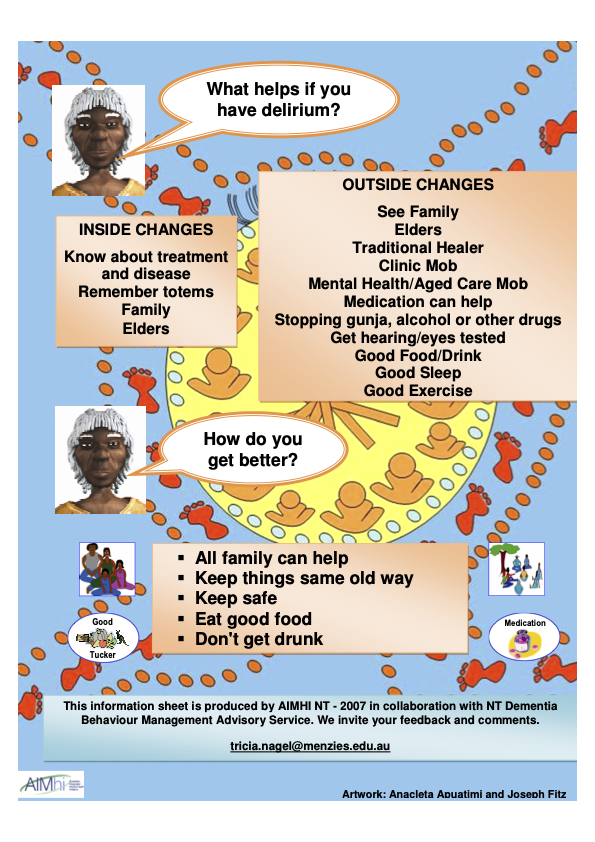
The information sheet shown above was produced by AIMHI NT in collaboration with the NT Dementia Behaviour Management Advisory Service (Nagel, Apuatimi and Fitz, 2007, Menzies School of Health Research). Its content is set out below as text.
What is Delirium?
Delirium is a state where people get confused and mixed up. Signs include:
• Acting strangely
• Saying things that don't make sense
• Calling out
• Seeing things that aren't real (hallucinations)
• Sleeping poorly or too much
• Being restless (moving around a lot)
What Causes Delirium?
Possible causes include:
• Poor physical health
• Not drinking enough water
• Infections
• Too much alcohol, gunja (cannabis), or other drugs
• Pain or brain damage
• Sensory impairments (like trouble seeing or hearing)
How to Help Someone with Delirium
Outside support:
• Involve family, elders, traditional healers, health clinics, and mental health and aged care workers
• Get proper medication
• Stop alcohol, gunja, and other drugs
• Test hearing and eyesight
• Encourage good food, sleep, and exercise
Inside support:
• Educate about the illness and treatment
• Encourage connection to totems, family, and culture
Tips for Recovery
• Keep routines and surroundings familiar
• Keep the person safe
• Avoid alcohol and promote healthy food and sleep
• All family members can help with support
Clearer Days Delirium Support
Disclaimer
The information on this website is educational only and not medical advice.
© 2026. All rights reserved.





First Nations Australian Resources
LGBTQI+ Resources
Acknowledgement of Country
Clearer Days Delirium Support acknowledges the Traditional Custodians of the lands around Australia where it was developed and pay our respects to Elders past and present.